

Most people think a belt is just a belt — something you thread through loops and forget about. But the way your belt fastens? That's a quiet signal you send before you even open your mouth.
The right fastening style sharpens a boardroom look. It lifts a weekend outfit. It shows the world you pay attention to detail. The wrong one pulls down everything else you've put together.
These 4 belt fastening styles that make a statement aren't just functional choices. They're style decisions with real weight behind them. Here's what each one says about you — and how to pick the one that says what you mean.
Classic Method for Formal Belts
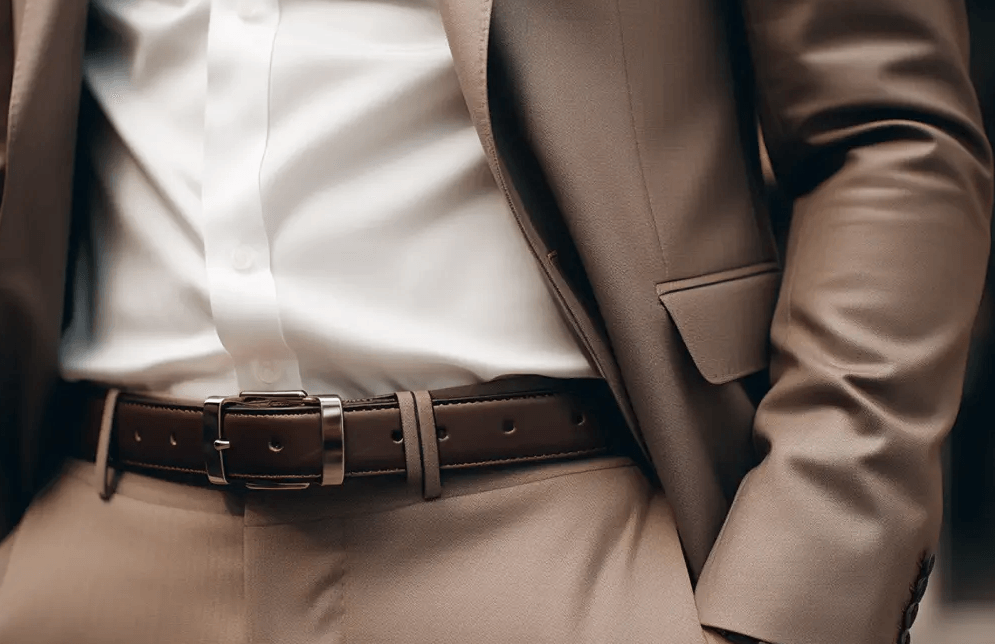
Walk into any boardroom, wedding, or black-tie event — look down at the belts. Most of them will have a pin buckle. That's not a coincidence. It's a century of consensus.
The pin buckle (also called a tang buckle) is the foundational fastening style. A rigid frame. A single movable pin. Clean, direct, no guesswork. It doesn't beg for attention — it belongs wherever you put it.
Why It Still Dominates Formal Dressing
There's a reason dress codes don't specify buckle styles. They assume pin buckle. It's the default choice for dressing with intention.
The mechanics matter too. At 3cm wide in formal configurations, a pin buckle sits flat against the trouser waistband. No bulk. No fuss. Pair it with cowhide or calfskin leather, and it moves and ages with you — building a patina that synthetic materials never match.
Material and finish carry the personality:
- Polished brass — warm-toned, traditional, pairs with tan and cognac leather
- Brushed silver (stainless steel or 316L) — cooler, more modern, pairs with black and dark brown leather
- Gold or rose gold IP plating — elevated, best saved for evening occasions or statement suiting
The Styling Formula Worth Remembering
One rule makes the difference: match your belt to your shoes. Not your watch. Not your buttons. Your shoes. Pin buckle belts are built for this level of precision — the finish mirrors the shoe hardware.
Width matters too. Formal trousers call for narrower. Chinos and structured denim take a wider frame without losing proportion.
The pin buckle doesn't make noise. It doesn't catch light from across the room. What it does — without trying — is signal that you know the rules. And that you wear them with ease.
That's the power move.
Ratchet Fastening Method for Modern Belts
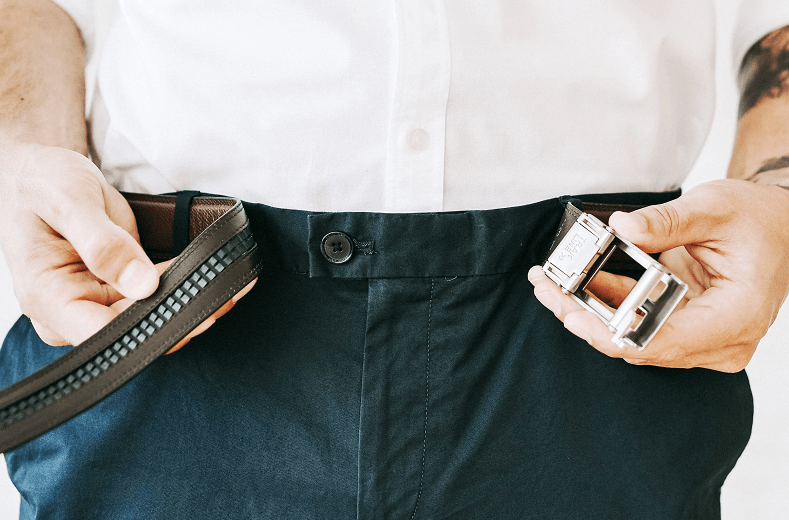
By your third meeting, a traditional belt has already betrayed you. It's either too tight or sliding loose. A ratchet belt doesn't do that.
The ratchet system runs on a notched track built into the strap's inner surface. Teeth on the buckle's underside grip those tracks and lock into place. No holes. No fixed spacing. You get quarter-inch increment adjustments — a level of precision that standard pin buckles can't match. Pull the strap to where it feels right, press the lever to lock, and you're done.
That's the practical edge. But there's a design story here too.
A Buckle That Grew Up
Old ratchet buckles looked bulky. Thick hardware, a heavy feel — that kept them off dress trousers. That era is over. Today's ratchet buckles have dropped that chunky profile. The hardware sits low and flat. The track is hidden inside. What you're left with is a sleek, minimalist silhouette that looks deliberate, not industrial.
So the custom ratchet belt is a real wardrobe tool — not just a comfort fix.
Where It Performs Best
Two outfit contexts bring out its full value:
- Business casual — Pair with chinos and a button-down. The precise fit holds the waistband right where it belongs. That lets the quality of the fabric stand out. Nylon ratchet straps work well here — durable, structured, and sharp enough to carry the look.
- Smart casual — Jeans and a blazer get a cleaner finish with a ratchet belt. The adjustable track cuts out the slight looseness that makes a sharp outfit look sloppy.
One sizing note: measure your waist snug with a flexible tape before buying. Pick a custom belt that gives you adjustment range on both sides of that number — not just one. Your body shifts through the day, and the ratchet belt moves with it.
That's the secret. Not magic. Just a smarter mechanism.
Magnetic Buckle Fastening for Minimalist Belts
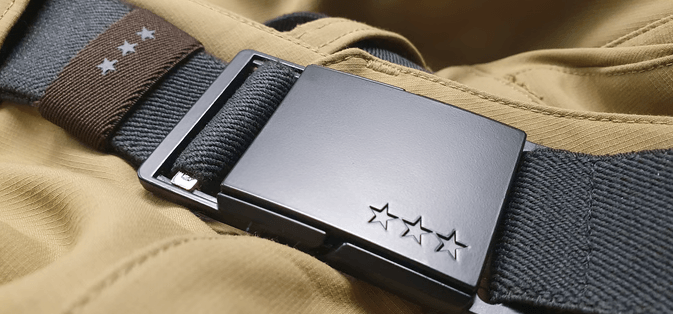
Snap. Locked. Ready. That's the full experience of a magnetic buckle. For a growing number of intentional dressers, that speed isn't laziness. It's a design standard.
Magnetic buckles strip belt fastening down to its core. No prong. No threading. No fumbling with holes. The male and female elements align on contact. Internal magnets guide them into place. They lock in under two seconds. Clean hardware on the outside. Smart engineering on the inside. That contrast is what minimalist style is built on.
The Engineering Behind the Snap
Not all magnetic buckles are equal. The difference shows up in the mechanism.
Budget options use basic magnetic attraction alone. That holds — until it doesn't. Premium buckles combine magnetic guidance with a mechanical lock. Two very different things.
The FIDLOCK Cointrap system is a solid benchmark. It weighs under 8 grams. A rotatable male part absorbs movement. Two undercuts create a firm, multi-directional hold. You're not just snapping two pieces together. You're engaging a system that pushes back against vertical slip and horizontal pull at the same time. That distinction is backed by structural patent US6857169B2.
At the top end, the Titaner TiBuckle goes further. It uses GR5 titanium construction and a patented dual-lock mechanism. The hardware is feather-light. It won't loosen under regular stress. That's proof that "minimalist" doesn't mean fragile.
Magnet grade matters too. Rare-earth neodymium magnets pack strong holding power into a compact size. They're the difference between a buckle that actually holds and one that just looks like it will.
Who It's Built For
Magnetic buckles work well across travel, activewear, and smart casual dressing. The SR-Series top-entry drop-in design closes with one hand — even with gloves on. Most traditional buckles can't say the same.
The tradeoff is long-term magnet strength. Heavy use can cut holding power by 10–20% over a year. Rotate your belts and that timeline stretches out.
The magnetic buckle doesn't shout. It just works — faster, cleaner, and sharper than anything with holes.
Slide / Friction-Lock Buckle: The Clean Silhouette Statement
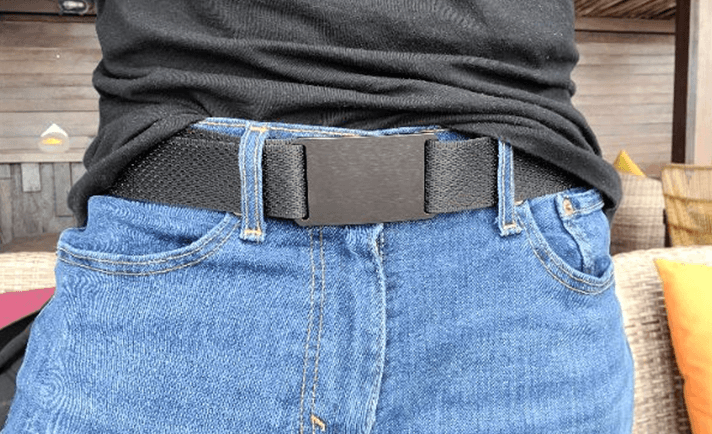
No holes. No prong. Just a clean, unbroken line of webbing from waist to tip.
That's the entire visual pitch of the slide buckle — and for a certain type of dresser, it's enough. The friction-lock system doesn't announce itself. It disappears into the silhouette. That's the whole point.
How the Mechanism Works
The engineering is simple. The result is precise. Webbing threads up through a center slot, passes over a knurled bar, then folds back under the outer frame. Friction and constant spring tension lock it in place. No fixed adjustment points. You slide the frame to the right fit, pull, and the ridged bar grips the strap and holds.
That grip is what separates this from a basic tri-glide adjuster. The knurled bar works with the spring-loaded slider to give you infinite, one-handed adjustment. No gaps between positions. No skipping from one hole to the next.
Built Stronger Than It Looks
A slim profile doesn't mean a weak build. Quality friction-lock buckles use AISI 4130/4140 alloy steel. They go through heat treatment to reach 35–42 Rc hardness. Zinc or cadmium plating adds corrosion resistance. Tensile strength hits 4,000 lbs (17.8 kN) — solid numbers that meet OSHA 1910.66 and ANSI Z359.1 standards.
A well-made frame lands around 90 grams. That weight tells you something. It means the frame thickness and finish are pro-grade, not just decorative.
What It Works With
Width options run from 8mm up to 2 inches, so the hardware fits a wide range of uses. Nylon webbing grips through the knurled ridges with no slipping — a strong match for outdoor waist belts and backpack straps. Pair premium leather straps with polished sliders and the whole look shifts toward refined minimalism. Sharp enough for smart casual. Low-profile enough to stay out of the way.
The slide buckle makes its statement by showing almost nothing. Clean silhouette. Zero clutter. All intention.
How to Choose Your Fastening Style Based on the Statement You Want to Make
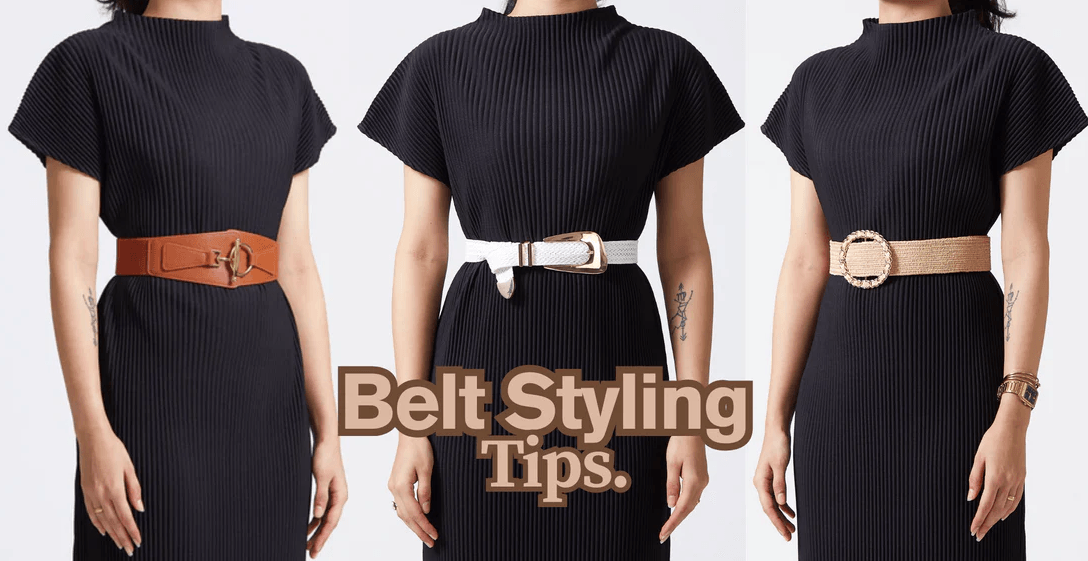
Four styles. Four different signals. The one you reach for this morning tells a story before your outfit gets a chance to.
Here's a direct way to think about it: start with the statement, then work backward to the hardware.
Match the Buckle to the Moment
- Need authority? Go pin buckle. Boardroom presentations, formal dinners, interviews — the wrong detail costs you credibility in these settings. The pin buckle is the standard. Wearing it with confidence says you understand the room. Pair it with polished brass or brushed steel, and it's clear you dressed with intention, not just habit.
- Need precision and adaptability? Go ratchet. Long travel days, back-to-back meetings, any situation where your body shifts between 8am and 6pm — the ratchet belt moves with you. The statement is quiet but deliberate: nothing about this look is an accident.
- Want speed and clean lines? Go magnetic. Minimalist dressing isn't about removing effort. It's about removing clutter. A magnetic buckle with premium hardware sends that message. It lands best when the rest of your outfit is stripped back too.
- Want the silhouette to do the talking? Go slide buckle. No visible hardware means the fabric, the fit, and the proportions carry everything. That's a confident move. It suits smart casual and outdoor settings where a clean, unbroken line matters more than a recognizable buckle.
The One Question Sunteam Designers Ask Before Any Belt Development
At Sunteam, our designers don't start with the buckle — they start with positioning.
Before we move into belt manufacture, we ask one key question for our clients:
Do you want the belt to stand out, or do you want it to support the overall look?
From a product development perspective, this decision defines everything.
Plate and pin buckles are built to attract attention — ideal for statement-driven collections.
Magnetic and slide buckles, on the other hand, are designed to stay subtle — perfect for clean, minimal product lines.
Neither direction is better. But aligning the hardware choice with your brand's visual strategy is what turns a “good product” into a consistent, market-ready collection.
That's how we approach the four fastening styles in real OEM & ODM belt production.
For us, it's never just about the buckle — it's about helping brands deliver a clear, intentional message through every detail.
Conclusion
From a belt manufacturer's perspective, fastening choice is one of the most underestimated ways to define brand positioning.
Pin buckles, ratchet systems, magnetic closures, and slide buckles aren't just functional differences — they signal distinct value propositions to different market segments. Choosing the right one is less about preference, and more about aligning with your target customer.
In practice, refining your fastening system is a direct way to upgrade your product line. It sharpens identity, improves perceived value, and creates clearer differentiation in a crowded market.
At Sunteam, we support brands with belt manufacture, OEM services, and custom leather belts — helping turn design decisions into commercially effective products.